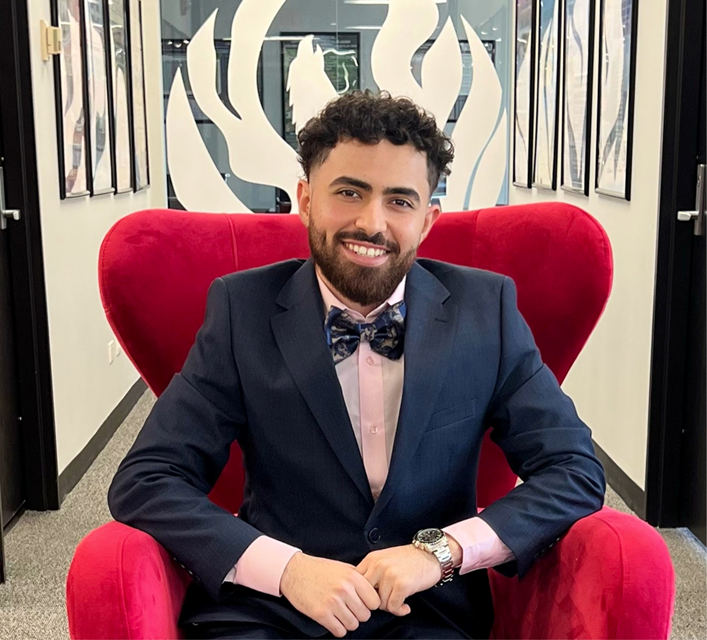
Now as a Field Training Agent, what advice does Saif have for the new agents coming in the door at USHA?”
“First they get to know my story,” says Saif. “I guess I was really bad at the beginning and when I started really committing to the work I do, that’s when I started being the Saif that everybody knows now. So the new agents know, they have an idea of who I am. And then once I introduce myself, the main advice I give them is I try to make this career relatable to them.”
“For example, there was one person who we hired who is 19-years-old, and the first thing I told him, I said, “Oh, you’re 19, man, I wish I started at 19. Do you realize the opportunity you have right now? If I were you I would be here in the office, a lot. All the hours you’re awake, I would basically be here and grind. And you have to commit yourself.” “I talk a lot about commitment. If you are in this opportunity, you have to be all in. Your work has to be intentional. You have to be genuine with the work that you do. If you’re not genuine, it’s not going to last. You can’t come here and just make fast money because you want to make a lot of money. Everybody wants to make a lot of money, but you have to be passionate about helping people. If you don’t have the client’s best interest at heart, you’re not going to last here. But if you genuinely care about all the clients that you talk to and you have their best interest in mind, well, then you have a passion for what you do now. It’s very easy to commit then.”
But it’s not just a commitment for Saif, that action coincides with another word, one that when you wrap your head around it becomes a direction for life – because it’s important in all that we do, or don’t do – that word is awareness. You can’t fix what you’re not aware of and you have to be aware to see what steps are necessary to build success.
“I was definitely making a commitment to turn my life and my business around, says Saif. “But commitment is a very vague term. I don’t think it’s one thing when I look at what I was doing before I was producing versus after I was producing. It’s two completely different things. When I wasn’t producing it’s because I wasn’t working as hard. I wasn’t focused. I would be listening to music at work. I wouldn’t pay attention during trainings. I wouldn’t take notes. I wouldn’t review my phone calls. So I wasn’t really doing anything productive at all. And then almost overnight, I just started trying to do everything I possibly can. So it’s almost like I was suddenly doing as many right things as possible. And that resulted in the production in my career you see right now. So now it’s changed. I’m coming in on time. I always set a certain amount of appointments. It’s every day where I text a certain amount of people.”
“I always work my CRM. I always train myself. I always track my production. I always think of new ways to do things, and I’m always being critical of my work and I’m always sharpening my tools in as many areas as possible. I wasn’t doing any of that beforehand. And I would say if I take away some of the things I’m doing right now, my production would drop a little bit and if I take away a little bit more, the production drops again. But the more I do the right things, the more my production goes up. So it’s a combination of everything.